Hack Your School Food
| Possible Subjects: | Home economics, SDGs focused activities, and STEM subjects such as Science, Math, or Design; Project-Based Learning (out of subject teaching) |
|---|---|
| Themes included: | Environment and climate impact, Social and Health impacts; Food hunger; Quality perception of food; Food values and belief; Food supply chain; Media trends; Peer group influence; Food waste calculation, Date labeling on food products. |
| Target group: | Grades 6, 7 and 8 (age 11+) |
| Hours required (total): | 1-2 hours for each 3 lessons. If you want to work on “Designing a school meal” from the food donations (from food bank), please add 2 hours. |
| Materials and facilities needed: | Room for group work, paper & writing materials |
Background & Introduction
Why is this topic important?
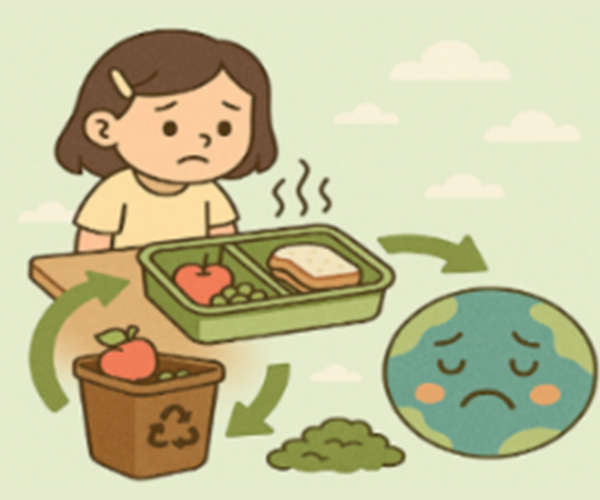
Food waste is one of the major challenges to the sustainability of today´s food system. Food waste behaviours can have long-term nutritional effect since healthy foods maybe the ones that are thrown. This makes promotion of both healthy and sustainable eating habits a critical priority. Learning how food systems work, how food impact on sustainability, and the consequences of food waste are all essential topics that impact directly our everyday lives. Reducing food waste offer a powerful strategy for encouraging healthier and more sustainable eating habit, especially among young people.
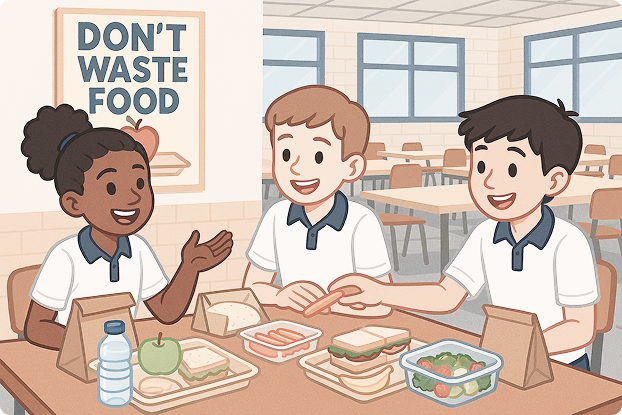
Schools provide an ideal setting for this effort, as they are places where learning and food practices naturally intersect. Young people’s food waste behavior is strongly shaped by personal preferences and perceptions of food quality, as well as influenced by peer group and social norm within the school environment. These personal preferences and perceptions of fruits and vegetables are often related to quality, based on taste and appearance of the food.
Social norms are rules and expectations about behaviours that are socially enforced so are one of the key factors that influence behaviours.
In the CHORIZO project, we explored various educational materials and strategies related to food and food waste, identifying food waste as a key topic for hands-on, project-based learning. Therefore we know that many schools have already put food waste on their teaching agenda with themes such as food sharing, use of surplus food, cooking workshops, demonstrations, planting, and Sustainable Development Goals (SDG), especially the SDG 12.3. And food related learning activities can be used for many school subjects like Science, Mathematic, Home economics and Project Based learning.
The topic of food waste is multifacetted and contains a broad range of themes that are well-suited for school activities such as: Quality (Taste, texture, freshness) perceptions; current media trends; food culture; social norms; date marking of food products; responsible consumption; nutritional and health impact, economy; social equality and environmental impact. And the good news is that reduction of food waste is something that everybody can do something about – and that can have a direct and measurable impact. Actions to reduce food waste can be
1 Social norms are rules and expectations about behaviours that are socially enforced so are one of the key factors that influence behaviours.
2 CHORIZO project newsletter on “ Young peoples´ behavior toward lunch-packs” – https://chorizoproject.eu/wp-content/uploads/2025/01/Newsletter7_CHORIZOv3.pdf
quantified in terms of both saved CO2-equivalents and nutritional value. Open sourced databases are available to calculate the climate impact and nutritional value of specific food items that are at risk of being wasted. Furthermore since schools have close ties with families, food waste literacy created at school might easily extend into behavioral change in the home environment.
Learning Goals
What Will We Learn?
The main goal of this learning activity is to increase students’ knowledge about overall food systems and their knowledge and skills to reduce food waste. In other words, to provide students with actionable power to reduce unnecessary waste of food and at the same time learn about social, economic and climate impacts of wasting food. The objectives of the learning activities are to:
- Explore various norms and important concepts around school food and food waste
- Learn how our behaviour around food waste is formed.
- Learn about the different causes and mitigation strategies on food waste.
- Learn about climate and nutritional impact of wasting food.
Earning Process
How Do We Organise Activities?
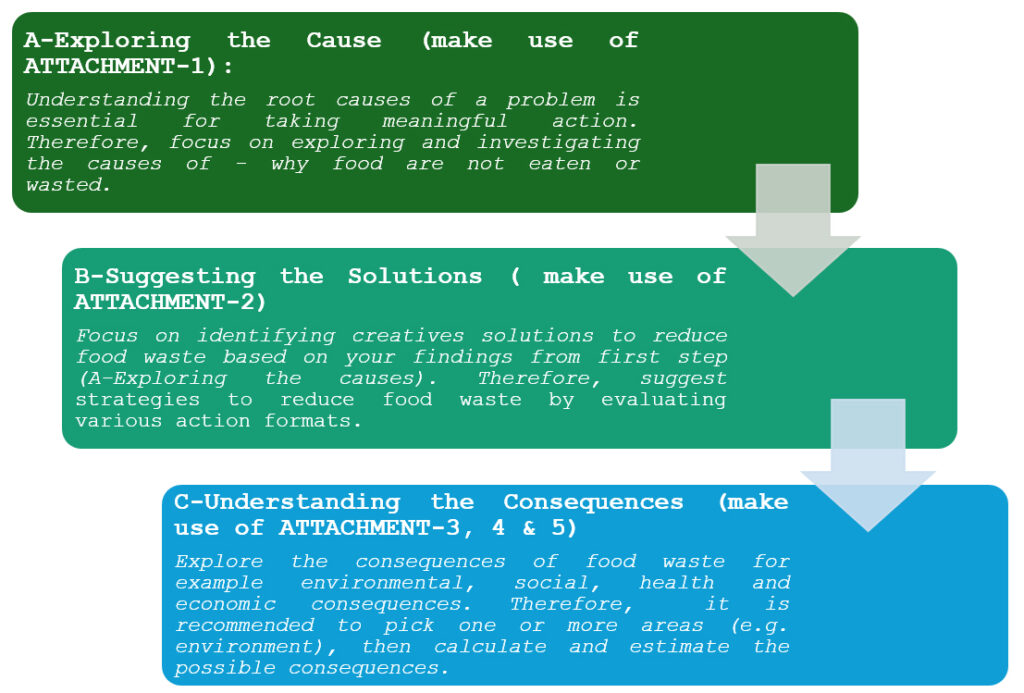
The activity can be organized in the form of workshop. The activity is most suitable for students from 6th to 8th grade (11+ years old). It is recommended to divide the class into small groups of 3-5 students. To carry out this activity consider 1-2 hours for each theme (A, B & C) below. As a teacher you could supervise and guide students during the group work.
Tip: Invite external mentors—such as university researchers, tech entrepreneurs, or local food surplus advocates—to enrich each theme with real-world insights and inspiration.
As shown in Figure 1, the activity can be organized in three different workshops. Students can work in a groups and reflect on what are the causes of food waste, discuss on what possible solutions, and explore the various impacts related to climate, economics, social, and personal health. For the guidance of the student, you can make use of the inspirational themes and question provided as ATTACHMENTs.
Resources & Links – Where Can I Learn More?
| Link and title | Description of the resource |
|---|---|
| Climate database | Food Climate database from Denmark and useful for whole Europe |
| Seasonal Calendar | Platform to Explore Seasonal Fruit and Vegetables in Europe |
| TasteGuide (Smaguiden) | Visual guidance of the taste and taste matching of the food ingredients |
| Food Climate Database | Database of climate impact of food items |
| Haver til Maver (”Gardens2Bellies”) | School gardening and food waste learning activity center |
| SAPERE – network for a promising educational approach https://www.sapere-association.com/ | Taste educational resources on preferences, likes and dislikes in relation to foods and how insights can be used in school teaching |
| Food Educators | Learning resources for food literacy training in school settings |
For more information, please contact the team from University of Copenhagen
Mukti R. Chapagain at mrc@ign.ku.dk
Subash Rana at sr@ign.ku.dk
Bent Egberg Mikkelsen at bemi@ign.ku.dk
ATTACHMENT-1: THEMES AND INSPIRATIONAL QUESTIONS FOR EXPLORING THE CAUSES OF FOOD WASTE (WHY ARE FOOD WASTED?)
To explore the cause of the food waste, following themes and questions can serve as inspiration.
Themes: Quality (Taste, texture, freshness) perceptions of fruits and vegetables
- What do you consider to be attractive school food or lunch?
- How would you like it to look and taste? And why?
- Does the texture and freshness of the food (e.g. how it looks), and taste (how it tastes) have impact on liking and disliking of the food?
- Do you reject any food based on their appearance (fx. Attractive or unattractive looks)?
Themes: Media trends (Tik-Tok influencer; Media news; Social Media) influence on what is cool to bring to school
- How do media news, advertisements or celebrity posts on social media influence your preferences of foods, e.g. on what is considered cool to eat at school?
- Which kind of news and trends have the biggest influence on your choices?
- Is it possible to have a critical stance toward how media portrays foods?
Themes: Food values and beliefs (Strong odor and the smell of food items)
- Which types of food have a smell that is perceived to be unpleasant?
- Can the smell of food affect your willingness to eat it?
- How does cultural background influence our perception of food odors?
Themes: Social norms and shared expectations
- What kind of beliefs about food can you think of that exist in your peer group?
- Do you think that these common beliefs are helpful when it comes to avoiding food waste?
- Or do you think that they contribute to creating food waste?
- Do you agree with these common beliefs?
- What kind of shared norms and expectations exist in your group, and how might they contribute to food waste?
Themes: Date marking of food products
- How it may confuse people on two types of dates on food product: BEST BEFORE and USE BY.
- Do you know what to do with the food that just passed the BEST BEFORE date?
- Do you know what to do with the food that just passed the USE BY date?
Themes: Portion size
- How might the buffet setting and plate size influence food waste?
- What about yourself? Are you following this general rule at buffets?
- Can you think of any ways in which we can avoid taking too much from the buffet?
ATTACHMENT-2: THEMES AND INSPIRATIONAL QUESTIONS FOR SUGGESTING POSSIBLE SOLUTIONS (WHAT CAN WE DO TO REDUCE OR PREVENT FOOD WASTE?)
To come up with creative solutions for reducing food waste, the following themes and questions can serve inspiration.
Themes – SDG (Responsible consumption; Climate friendly food)
- Could you think of actions that could help to reduce food waste?
- What is climate-friendly food and is it related to whether it is meat and plant-based?
- Think about the actions we could take to either avoid or reduce the waste.
Themes – Food chain (Production, processing, distribution, retailing to consumption)
- Do you know in which part of the food value chain the most food waste happens?
- Have you noticed any food waste initiatives in your own favorite grocery?
- How our shopping behaviours contribute to food waste
Themes – Peer group interaction (Viewpoints on the quality of food)
- How do your friends and classmates talk about school lunch, e.g. what is nice to eat in lunch packs and what is not so nice?
- Why do you think that your peers think the way they think about food in lunch packs? And do you agree with them?
- How could student help each-other to reduce food waste?
Themes- Student-Parent interactions (Talking to parents about the food you like or dislike)
- Can you think of 5 good tips you can use to create dialogue about food with parents in the case where you have a lunch box?
- Discuss some of the good tips to consider in preparing your lunch pack.
- Idea on communicating and convincing your parents to prepare the food you like!
Themes- Re-use of surplus food
- Can you think of ways to make a meal such as salad, sandwich, or fresh fruits sticks, from the surplus food available.
- Can you regrow some of the leftover vegetables? And if so, how would you do that?
- Can you think of some creative ideas to reuse surplus food?
ATTACHMENT-3: THEMES AND INSPIRATIONAL QUESTIONS FOR UNDERSTANDING THE CONSEQUENCES OF FOOD WASTE (WHAT ARE THE IMMEDIATE OR LONG-TERM EFFECTS?)
To explore the various consequences of food waste, for example environmental, social, health and economic consequences, following themes can serve as inspiration.
Themes: Nutritional and long-term health effects of wasting food
- Discuss some of the good tips to consider in preparing your lunch pack.
- Give good examples to each other. Also, discuss the recommendations for eating more fruit and vegetables.
- Would you for instance like to try cucumber sticks, baked cauliflowers or other easy finger foods?
- Lunch provides important nutrients for our long-term personal health.
Themes: Economy (Wasting food means wasting money)
- How do you think it affects your economy if you waste a lot of food?
- How do you think it affects your economy if someone else waste food from the retail shop?
- How do you think it affects our economy if someone wastes food in the school canteen?
- Think in term of cost for production & resources is wasted when we waste food
Themes: Social inequalities (World hunger)
- Why do you think we should care about world hunger?
- Do you think there is a relation between food waste created in one place and hunger in other places?
- Food that we are ready to throw might be eaten by someone else
Themes: Environmental impact
- Discuss some of the signs and indicators of the environmental crisis we are facing?
- Discuss to what extent these signs of a crisis have a connection with the way our food system is working?
- Discuss some of the direct impacts of food waste?
- Consider food transportation and food miles
- Consider CO2 footprint of the food waste
ATTACHMENT – 4: CLIMATE IMPACTS DATA OF SELECTED FOOD ITEMS
The table of the dataset is prepared based on “The big CLIMATE DATABASE-Version 1.2” – https://denstoreklimadatabase.dk/en
| SN | Name of the food Item | Category | Agriculture | Indirect Land use (iLUC) | Processing | Packaging | Transport | Retail | Total CO2_equivalent /Kg food |
|---|---|---|---|---|---|---|---|---|---|
| 1 | Artichoke | Veg. & veg. products | 0,68 | 0,04 | 0,00 | 0,06 | 0,19 | 0,01 | 0,98 |
| 2 | Artichoke Asparagus, green | Veg. & veg. products | 0,82 | 0,08 | 0,00 | 0,06 | 0,11 | 0,01 | 1,08 |
| 3 | Aubergine | Veg. & veg. products | 0,51 | 0,03 | 0,00 | 0,14 | 0,30 | 0,01 | 0,99 |
| 4 | Basil, fresh | Veg. & veg. products | 0,25 | 0,03 | 0,00 | 0,06 | 0,03 | 0,01 | 0,38 |
| 5 | Beet, red | Veg. & veg. products | 0,19 | 0,02 | 0,00 | 0,06 | 0,06 | 0,01 | 0,33 |
| 6 | Beet, red, canned | Veg. & veg. products | 0,30 | 0,02 | 0,20 | 0,22 | 0,11 | 0,01 | 0,86 |
| 7 | Broccoli | Veg. & veg. products | 0,42 | 0,04 | 0,00 | 0,06 | 0,11 | 0,01 | 0,63 |
| 8 | Brussels sprouts | Veg. & veg. products | 0,16 | 0,02 | 0,00 | 0,06 | 0,03 | 0,01 | 0,29 |
| 9 | Cabbage, red | Veg. & veg. products | 0,16 | 0,02 | 0,00 | 0,06 | 0,03 | 0,01 | 0,29 |
| 10 | Carrot | Veg. & veg. products | 0,15 | 0,02 | 0,00 | 0,06 | 0,04 | 0,01 | 0,27 |
| 11 | Cauliflower | Veg. & veg. products | 0,42 | 0,04 | 0,00 | 0,06 | 0,11 | 0,01 | 0,63 |
| 12 | Celery | Veg. & veg. products | 0,25 | 0,03 | 0,00 | 0,06 | 0,03 | 0,01 | 0,38 |
| 13 | Cucumber | Veg. & veg. products | 0,15 | 0,01 | 0,00 | 0,14 | 0,08 | 0,01 | 0,40 |
| 14 | Onion | Veg. & veg. products | 0,15 | 0,02 | 0,00 | 0,06 | 0,03 | 0,01 | 0,27 |
| 15 | Parsley | Veg. & veg. products | 0,25 | 0,03 | 0,00 | 0,14 | 0,03 | 0,01 | 0,45 |
| 16 | Potato | Veg. & veg. products | 0,26 | 0,02 | 0,00 | 0,06 | 0,06 | 0,01 | 0,41 |
| 17 | Potato, canned | Veg. & veg. products | 0,41 | 0,03 | 0,20 | 0,22 | 0,12 | 0,01 | 0,99 |
| 18 | Spinach | Veg. & veg. products | 0,31 | 0,03 | 0,00 | 0,06 | 0,08 | 0,01 | 0,48 |
| 19 | Tomato | Veg. & veg. products | 0,21 | 0,01 | 0,00 | 0,14 | 0,11 | 0,01 | 0,48 |
| 20 | Tomato paste, concentrated | Veg. & veg. products | 1,00 | 0,06 | 0,51 | 0,78 | 0,31 | 0,01 | 2,67 |
| 21 | Apple | Fruits & fruit products | 0,34 | 0,02 | 0,00 | 0,14 | 0,10 | 0,01 | 0,61 |
| 22 | Avocado | Fruits & fruit products | 0,77 | 0,05 | 0,00 | 0,14 | 0,25 | 0,01 | 1,22 |
| 23 | Banana | Fruits & fruit products | 0,43 | 0,03 | 0,00 | 0,14 | 0,25 | 0,01 | 0,85 |
| 24 | Blueberries | Fruits & fruit products | 0,82 | 0,07 | 0,00 | 0,14 | 0,18 | 0,01 | 1,22 |
| 25 | Grape | Fruits & fruit products | 0,54 | 0,04 | 0,00 | 0,14 | 0,16 | 0,01 | 0,88 |
| 26 | Kiwi fruit | Fruits & fruit products | 0,43 | 0,03 | 0,00 | 0,14 | 0,14 | 0,01 | 0,75 |
| 27 | Lemon | Fruits & fruit products | 0,33 | 0,03 | 0,00 | 0,14 | 0,17 | 0,01 | 0,67 |
| 28 | Mango | Fruits & fruit products | 0,57 | 0,05 | 0,00 | 0,14 | 0,24 | 0,01 | 1,01 |
| 29 | Orange | Fruits & fruit products | 0,31 | 0,03 | 0,00 | 0,06 | 0,16 | 0,01 | 0,56 |
| 30 | Pineapple | Fruits & fruit products | 0,30 | 0,02 | 0,00 | 0,00 | 0,24 | 0,01 | 0,56 |
| 31 | Pineapple, canned | Fruits & fruit products | 0,28 | 0,03 | 0,22 | 0,22 | 0,37 | 0,01 | 1,13 |
| 32 | Strawberry | Fruits & fruit products | 0,41 | 0,04 | 0,00 | 0,14 | 0,06 | 0,01 | 0,65 |
| 33 | Watermelon | Fruits & fruit products | 0,22 | 0,01 | 0,00 | 0,00 | 0,16 | 0,01 | 0,40 |
| 34 | Biscuit, sweet | Bread & bakery | 0,84 | 0,07 | 1,16 | 0,67 | 0,18 | 0,01 | 2,93 |
| 35 | Burger bun | Bread & bakery | 0,87 | 0,06 | 0,11 | 0,04 | 0,07 | 0,01 | 1,16 |
| 36 | Rye bread, dark, whole grains, industrially produced | Bread & bakery | 0,70 | 0,06 | 0,13 | 0,04 | 0,07 | 0,01 | 1,02 |
| 37 | Tortilla bread, wheat | Bread & bakery | 0,87 | 0,06 | 0,11 | 0,04 | 0,07 | 0,01 | 1,16 |
| 38 | Wheat bread, for toasting, industrially produced | Bread & bakery | 0,87 | 0,06 | 0,11 | 0,04 | 0,07 | 0,01 | 1,16 |
| 39 | Beef, meat, average | Meat & poultry | 60,82 | 15,81 | -2,97 | 0,14 | 1,05 | 0,00 | 74,84 |
| 40 | Beef, mince, 5-10% fat | Meat & poultry | 42,05 | 10,99 | -3,23 | 0,14 | 0,67 | 0,00 | 50,61 |
| 41 | Beef, sausage, salami | Meat & poultry | 38,94 | 10,05 | -0,54 | 0,02 | 0,68 | 0,01 | 49,16 |
| 42 | Chicken, meat, average | Meat & poultry | 2,71 | 0,18 | -0,01 | 0,14 | 0,25 | 0,00 | 3,27 |
| 43 | Chicken, minced | Meat & poultry | 5,01 | 0,36 | -0,09 | 0,14 | 0,28 | 0,00 | 5,71 |
| 44 | Chicken, whole | Meat & poultry | 2,71 | 0,18 | -0,01 | 0,14 | 0,25 | 0,00 | 3,27 |
| 45 | Lamb, meat, average values | Meat & poultry | 36,94 | 4,22 | -5,34 | 0,14 | 0,48 | 0,00 | 36,43 |
| 46 | Lamb, minced | Meat & poultry | 34,99 | 3,99 | -4,82 | 0,14 | 0,43 | 0,00 | 34,73 |
| 47 | Pork, meat, average | Meat & poultry | 4,35 | 0,25 | -0,23 | 0,14 | 0,19 | 0,00 | 4,69 |
| 48 | Pork, mince, 5-10% fat | Meat & poultry | 3,87 | 0,25 | -0,71 | 0,14 | 0,13 | 0,00 | 3,67 |
| 49 | Falafel mince | Plant products | 0,96 | 0,17 | 0,18 | 0,64 | 0,11 | 0,00 | 2,06 |
| 50 | Olive oil | Plant products | 4,33 | 0,64 | -0,03 | 0,56 | 0,38 | 0,01 | 5,89 |
| 51 | Sunflower oil | Plant products | 0,00 | 0,00 | 1,92 | 0,56 | 0,30 | 0,01 | 2,79 |
| 52 | Vegan burger, soy based | Plant products | 0,08 | 0,04 | 0,21 | 0,26 | 0,07 | 0,02 | 0,69 |
| 53 | Chestnut | Nuts & seeds | 1,73 | 0,11 | 0,00 | 0,14 | 0,33 | 0,01 | 2,31 |
| 54 | Peanuts, oilroasted and salted | Nuts & seeds | 1,91 | 0,22 | 0,72 | 0,26 | 0,35 | 0,01 | 3,47 |
| 55 | Blue cheese | Milk, dairy & eggs | 2,67 | -1,33 | -0,35 | 0,35 | 0,26 | 0,00 | 1,60 |
| 56 | Cheese, hard, Parmesan, 32 % fidm. | Milk, dairy & eggs | 4,46 | -2,34 | 2,52 | 0,35 | 0,42 | 0,00 | 5,41 |
| 57 | Eggs, free-range (indoor) | Milk, dairy & eggs | 0,57 | 0,07 | 0,00 | 0,24 | 0,09 | 0,01 | 0,97 |
| 58 | Milk, whole, 3.5 % fat | Milk, dairy & eggs | 0,48 | -0,24 | 0,12 | 0,08 | 0,07 | 0,00 | 0,50 |
| 59 | Yogurt plain, whole milk | Milk, dairy & eggs | 0,47 | -0,24 | 0,17 | 0,26 | 0,07 | 0,00 | 0,73 |
| 60 | Breakfast cereal, müsli, average values | cereal products | 1,35 | 0,15 | 0,15 | 0,58 | 0,07 | 0,01 | 2,31 |
| 61 | Corn flakes, average values | cereal products | 1,22 | 0,14 | 0,31 | 0,58 | 0,13 | 0,01 | 2,39 |
| 62 | Pasta | cereal products | 1,18 | 0,09 | 0,18 | 0,23 | 0,36 | 0,01 | 2,05 |
| 63 | Rice flour | cereal products | 4,37 | 0,17 | 0,00 | 0,20 | 0,38 | 0,01 | 5,12 |
| 64 | Rye flour, dark, whole meal | cereal products | 0,78 | 0,09 | 0,03 | 0,20 | 0,07 | 0,01 | 1,17 |
| 65 | Wheat, flour, wholemeal | cereal products | 0,86 | 0,07 | 0,03 | 0,20 | 0,07 | 0,01 | 1,24 |
As shown in figure 1 below, overview of the climate impact (CO2 emissions) associated with different food categories, highlighting the five main stages of CO2 contribution across food supply chain. The figure shows that meat and poultry category have highest Climate CO2 impact and mainly come from agriculture production. The climate impact in the Fruits and Vegetable category mainly contributed from transportation.
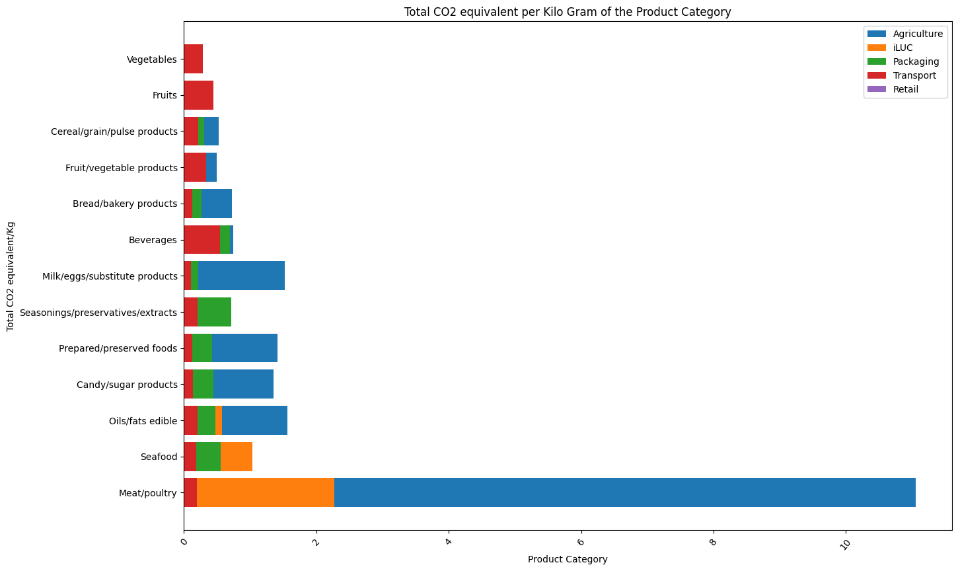
Figure 1- Overview of CO2 impact of the food product category. Source CONCITO food climate dataset.
ATTACHMENT 5: WORKING TABLE TO CALCULATE CLIMATE IMPACT IN YOUR OWN CASE.
By using a climate impact table (ATTACHMENT-4) any action and food behaviour, any change or intervention can be expressed in terms of carbon equivalents (kg. CO2/ pr.kg). In other words, anything you do with food – or choose not to do – can be expressed in terms of impact on the climate (CO2 emissions).
Let’s say for instance, you found that about half a cucumber which is approximately 150 gram is wasted in the school canteen and that you decide that this should stop. That action – or intervention – can then be calculated in terms of – in this case a positive – impact on the climate.
So, in order to do the calculation for any other food, you will need to know what types of foods are wasted and in what amounts. Once you have this list of types and amounts you can start converting those to climate equivalence in table below.
| Food item in focus - write the name of each food item to calculate CO2 impact (a) | Amount - edible amount of food items “convert to kg” (b) | CO2 Impact (in kg. CO2/ pr.kg food) - CO2 impact of food item in focus (See Attachment 4) (c ) | Avoided CO2 impact Grams of food X kg CO2/pr.kg (d=b x c) | Where the most of CO2 come from? - what part of the supply chain have higher CO2 impact? (See Attachment 4) ( e) |
|---|---|---|---|---|
| For example, Half cucumber | For example, 150 grams = 0,15 kg | For example, 0.5 | For example, 0,075 kg CO2/pr.kg (0,15 kg * 0,5) | For example, Transportation |
| Total (add the amounts from Avoided CO2 impact) |
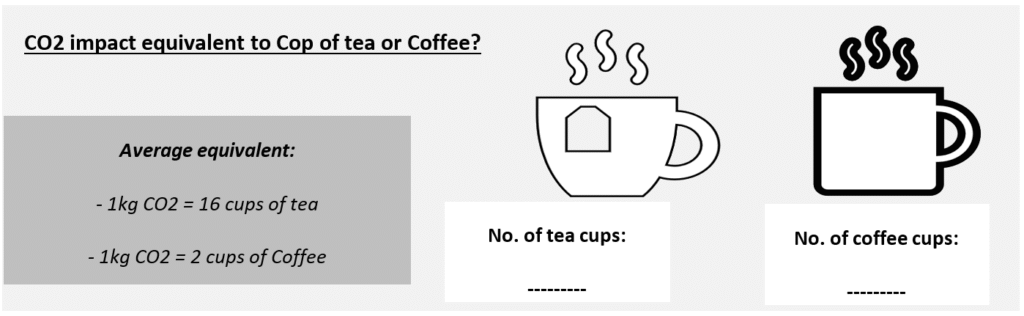
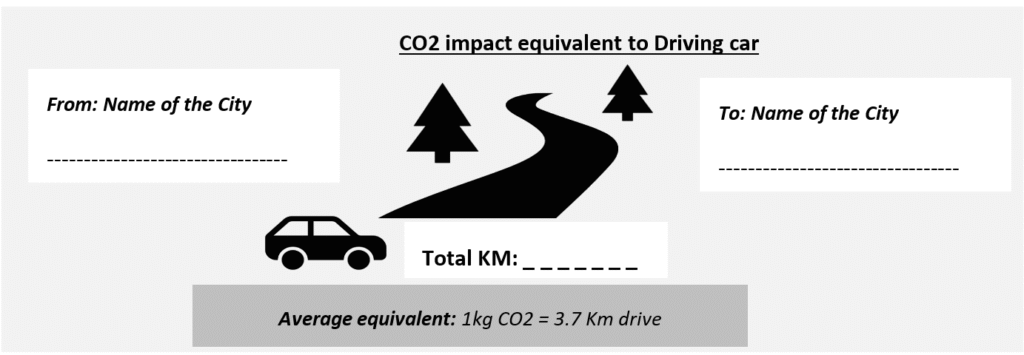
What can we do with CO2 impact avoided? Put them in the figures below.